What Maintenance Keeps Brass Bibcock Hosebibs Running Reliably?
Views: 0 Author: Site Editor Publish Time: 2026-09-26 Origin: Site


Neglected outdoor plumbing infrastructure poses severe operational risks for any facility. Hidden leaks silently waste thousands of gallons of water each month. Catastrophic freeze damage ruins complex piping networks overnight. We see these issues constantly across residential and commercial properties. While brass remains the industry standard for durability, it is not invincible. Environmental exposure actively degrades internal components over time. Mechanical wear inevitably compromises watertight seals. Friction destroys threading during heavy, repetitive use. We understand the frustration of discovering a shattered valve after a hard winter freeze. This article provides a standardized maintenance framework. You will learn how to extend valve lifespan significantly. We also outline clear evaluation criteria. These guidelines help you decide when to repair versus replace aging fixtures. By following these proactive protocols, you eliminate preventable failures entirely. You will maintain steady, reliable access to outdoor water year-round.
Key Takeaways
- Routine seasonal maintenance, specifically winterization and O-ring inspections, prevents 80% of premature valve failures.
- Persistent leaks around the packing nut often require simple tightening, but degraded threads signal a necessary replacement.
- When upgrading, matching exact brass bibcock hosebibs specifications (alloy grade, pressure ratings) to your local climate and water chemistry is critical.
- Commercial and shared-space applications benefit heavily from transitioning to a high quality brass lockable garden bibcock to prevent unauthorized use.
The Operational Realities of Brass Bibcock Hosebibs
We rely heavily on standard brass bibcock hosebibs for outdoor plumbing systems. Industry professionals choose them for their excellent corrosion resistance. They handle extreme temperature fluctuations effortlessly. Brass sustains high water pressure without stretching or warping. However, you must acknowledge its real-world limitations. Highly acidic water creates a severe chemical vulnerability. We call this destructive process dezincification.
Dezincification destroys structural integrity quietly from the inside out. Acidic water dissolves zinc molecules inside the alloy. It leaves behind a porous, fragile copper shell. The valve appears completely normal externally. However, it becomes incredibly brittle and shears off during routine operation. Environmental factors also accelerate external degradation. Acidic soil degrades buried components quickly. Hard water leaves destructive calcium deposits behind.
We see specific common failure points repeatedly in the field. You should inspect for these specific issues:
- Packing nut degradation: Constant friction and overtightening destroy the internal rubber washers.
- Mineral scaling: Calcium deposits build up inside the valve seat, preventing a flush seal.
- Micro-fractures: Trapped water expands as it freezes, cracking the dense metal casing.
Seasonal Maintenance Protocols for Long-Term Reliability
Proactive maintenance determines the actual lifespan of your hardware. A rigid seasonal protocol prevents the vast majority of catastrophic failures. We break this down into two critical phases.
Pre-Winter: Freeze Prevention
Winterizing your system protects it from expanding ice. Standard models hold water inside the exterior chamber. You must clear this water before ambient temperatures drop below freezing. Follow these strict steps to drain the line properly:
- Locate your interior isolation valve and turn the water supply off completely.
- Disconnect all garden hoses, splitters, and external timers.
- Open the exterior bibcock completely to break the vacuum seal.
- Allow all residual water to drain out of the system.
- Leave the exterior valve in the open position throughout the winter.
Insulation provides secondary protection. Non-frost-free models require external foam covers. These covers trap radiant heat escaping from the building envelope. Secure them tightly against the exterior wall to prevent drafts.
Spring/Summer: Operational Readiness
Warmer months demand a different maintenance approach. You must verify operational readiness before heavy summer use begins. Test the system for both static and active leaks. Close the valve and turn on the interior supply line. Check for drips around the spout. Open the valve and inspect the packing nut behind the handle for moisture.
Clean the aerator and threading thoroughly. Use a stiff wire brush to remove grit. Apply a mild descaling solution to dissolve heavy mineral buildup. Finally, lubricate the valve stem. We recommend applying waterproof plumber's grease. This ensures smooth handle operation and protects the elastomeric seals from drying out.
The Repair vs. Replace Threshold: A Decision Framework
Facility managers often struggle with deciding whether to fix a broken fixture or replace it. Repairing offers low-cost, high-yield solutions for minor issues. Replacing becomes mandatory when systemic failure threatens property safety. We use a clear decision framework to evaluate hardware condition.
When to repair is usually straightforward. Dripping spouts represent the most common complaint. This symptom almost always requires a simple two-dollar rubber washer replacement. Leaking handles present another easy fix. You can often stop the leak by tightening the packing nut slightly. If tightening fails, replacing the internal Teflon tape usually resolves the issue.
When to replace involves identifying irreversible structural damage. Visible exterior cracking on the brass body demands immediate replacement. Pitting on the metal surface indicates severe corrosion. Stripped exterior hose threads prevent a secure seal, rendering the unit useless. Internal valve seat corrosion presents a hidden danger. A pitted internal seat shreds new rubber washers immediately upon installation.
Table: The Repair vs. Replace Decision Matrix
| Symptom | Underlying Cause | Action Required | Estimated Effort |
|---|---|---|---|
| Dripping spout when closed | Degraded internal rubber washer | Repair (Replace washer) | Low |
| Leaking near handle | Loose packing nut or worn tape | Repair (Tighten nut/Replace tape) | Low |
| Visible body cracking | Ice expansion or physical impact | Replace entire unit | High |
| Stripped exterior threads | Cross-threading or severe friction | Replace entire unit | Medium |
| Shredded new washers | Corroded or pitted valve seat | Replace entire unit | High |
Essential Brass Bibcock Hosebibs Specifications for Replacements
Choosing proper replacement parts demands precision. Matching exact brass bibcock hosebibs specifications guarantees a secure, leak-free installation. You must evaluate the alloy grading carefully. Dezincification Resistant (DZR) brass prevents premature material failure. DZR alloys undergo specialized heat treatments during manufacturing. They retain their zinc content even in highly aggressive water conditions. Lead-free compliance is equally critical today. NSF/ANSI 61 standards dictate strict lead limits. You must verify this certification for any potable water applications.
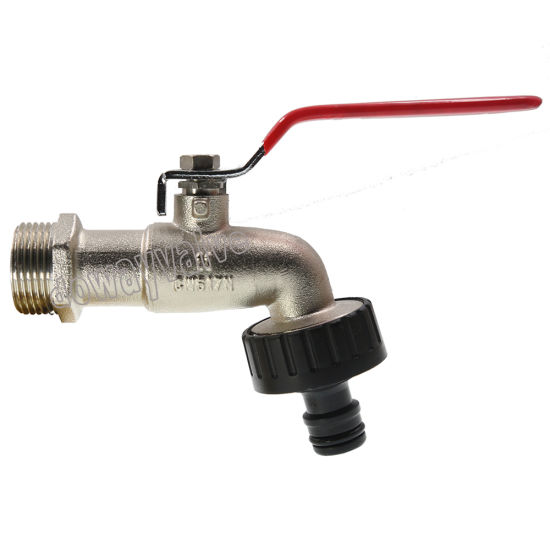
Evaluate the internal valve mechanisms next. Standard compression valves require multiple turns to close. They compress a thick rubber washer against a brass seat. This design causes significant mechanical friction over time. Quarter-turn ball valves offer superior long-term reliability. They utilize a stainless steel ball housed inside smooth Teflon seats. They operate fully with a simple 90-degree turn. Mechanical wear decreases dramatically with this design.
Sizing prevents major installation headaches. Outline your standard inlet sizes before ordering. You will typically encounter 1/2-inch or 3/4-inch pipe connections. Determine if your system requires Male Iron Pipe (MIP) or Female Iron Pipe (FIP) threading. The output threading must match Standard Garden Hose Thread (GHT). This ensures direct integration with existing hoses without using clumsy adapters.
Security Considerations: Upgrading to a High Quality Brass Lockable Garden Bibcock
Security matters immensely for shared water access points. Commercial properties face unauthorized usage daily. Vandals frequently leave valves running overnight. This intentional negligence causes extensive property damage. It wastes thousands of gallons of water rapidly. Multi-family residential settings experience similar issues with water theft. Upgrading your fixture stops this abuse immediately.
A high quality brass lockable garden bibcock secures the perimeter efficiently. It prevents unauthorized tampering without requiring complex plumbing overhauls. We recommend evaluating these specialized units using strict criteria.
Integrated padlock compatibility provides the strongest defense. Built-in locking holes secure the handle firmly to the valve body. Aftermarket locking covers often fail or break easily under pressure. Tamper-proof casing protects the internal stem mechanism from aggressive wrenching. Someone cannot easily dismantle the valve from the outside.
Maintenance access remains equally important. Authorized personnel need quick operation capabilities. Complex security devices slow down landscape crews and maintenance staff. You must select a design that balances robust security with practical daily utility. A well-designed lockable unit achieves both effortlessly.
How to Vet a Reliable Brass Bibcock Hosebibs Supplier
Procurement requires careful supplier evaluation. Low-grade imports flood the commercial plumbing market today. These inferior products feature porous, weak alloys. Quality assurance separates reliable manufacturing partners from poor ones. Look for documented ISO certifications immediately. Request transparent manufacturing material data sheets. This documentation proves the precise alloy composition accurately. It protects you from buying substandard materials.
Facility rollouts demand rapid scalability and consistent inventory. Assess your supplier's bulk delivery capabilities. They must match exact specifications across large orders. Minor thread variations cause massive installation delays across a facility. A reliable brass bibcock hosebibs supplier maintains strict dimensional tolerances on every unit they ship.
Warranty terms reveal profound product confidence. Prioritize partners offering documented warranties against manufacturing defects. They should provide clear installation guidelines and tolerances. Excellent technical support resolves integration issues quickly. A good supplier acts as a technical partner, not just a vendor.
Conclusion
Proactive maintenance definitively prevents extensive property damage. Draining lines before winter and inspecting O-rings annually saves countless hours of repair work. However, mechanical wear eventually dictates total replacement. Recognizing the symptoms of a failing valve allows you to act before a blowout occurs. Do not ignore stripped threads or heavily pitted brass bodies.
Audit your current outdoor valves for leaks and wear today. Test the handles for smooth operation. Inspect the ground below the spout for unexplained moisture. If you discover failing hardware, consult a qualified supplier immediately. Sourcing compliant, durable replacements now guarantees reliable operational performance for years to come.
FAQ
Q: How often should I replace the rubber washer in a brass bibcock?
A: Varies by usage, typically every 3-5 years or at the first sign of a persistent spout drip.
Q: What is the difference between a standard brass hose bibb and a frost-free sillcock?
A: Frost-free models have an elongated stem that houses the shut-off valve deep inside the heated envelope of the building, preventing trapped water from freezing.
Q: Can I use WD-40 to loosen a stuck brass bibcock handle?
A: Not recommended for internal plumbing parts; suggest plumber's grease or penetrating oils specifically rated for brass and rubber seals, warning against forceful turning that shears the stem.
