When Should You Request a Custom Gas Ball Valve?
Views: 0 Author: Site Editor Publish Time: 2026-09-22 Origin: Site


Standard off-the-shelf valves suit most residential and basic commercial plumbing perfectly. Manufacturers design these components for predictable environments and standard pressures. However, industrial applications and specialized OEM equipment often push these standard components far beyond their original design limits. Relying on an inadequate valve for combustible gas systems presents serious operational hazards across your facility.
This oversight risks dangerous fugitive emissions, costly code violations, and catastrophic system failure. When a standard brass component encounters highly corrosive media or extreme temperatures, it deteriorates rapidly. You cannot compromise on safety when handling volatile fluids.
Requesting a custom design becomes strictly necessary when standard dimensions, material compatibility, or pressure ratings fail to meet precise spatial or operational requirements. In the following sections, you will learn how to identify standard valve limitations and define your exact operational needs. We will explore the stringent safety certification landscape to keep your systems fully compliant. Finally, you will discover how to select the right manufacturing partner to solve your unique fluid control challenges.
Key Takeaways
- Customization is financially viable when specialized media, extreme temperatures, or unique connection types render standard valves unsafe or inefficient.
- Altering core gas ball valve specifications requires strict adherence to regional safety certifications (e.g., CSA, ASME).
- Selecting a custom manufacturer requires evaluating their in-house engineering, prototyping speed, and metallurgical QA/QC capabilities.
Standard vs. Custom: Identifying the Breaking Point
The Limits of Off-the-Shelf
Standard brass or carbon steel valves work exceptionally well for benign environments. They fail when introduced to extreme industrial thresholds. Highly corrosive environments, such as sour gas processing plants, introduce hydrogen sulfide into the pipeline. This compound aggressively attacks standard carbon steel, causing dangerous hydrogen embrittlement. You must upgrade to specialized alloys to prevent sudden housing fractures.
Cryogenic natural gas processing presents another severe operational threshold. Standard valves freeze and seize under these ultra-low temperatures. The internal seals contract and lose their elasticity, leading to immediate leaks. Cryogenic applications demand extended bonnets to protect the packing material from the cold medium.
Severe spatial constraints in OEM machinery also force the move away from standard components. Engineers often design compact equipment skids where traditional bulky handles simply do not fit. A standard gas ball valve might require too much clearance for actuation. In these confined spaces, you need customized compact bodies or recessed automation linkages to ensure proper operation without interfering with surrounding machinery.
Gas vs. Water Valve Distinctions
You should never repurpose standard water valves for gas pipelines. Fluid dynamics and safety requirements differ vastly between the two media. Water valves typically use EPDM rubber seals. Combustible gases rapidly degrade EPDM, causing the seal to swell and ultimately fail. Gas systems require highly resilient seating materials like PTFE or NBR.
Manufacturers pressure-test these components under entirely different protocols. Water valves undergo hydrostatic testing to detect gross leaks. Gas valves require stringent pneumatic testing using compressed air or helium to detect microscopic leakage paths. Furthermore, regional compliance codes strictly dictate design tolerances. Legal mandates require gas components to feature blowout-proof stems and specific anti-static devices to prevent spark generation. Water variants lack these critical safety mechanisms.
The "Build vs. Buy" Decision Matrix
Engineering and procurement teams face a complex choice when sourcing pipeline components. You must weigh standard availability against the necessity of custom tooling. We recommend using a systematic framework to guide this decision. Evaluate your operating pressure, spatial limits, media type, and cycle frequency.
If your application operates within normal pressure ranges using standard natural gas, off-the-shelf procurement remains the best choice. When your system involves mixed gases, high-cycle automation, or tight integration into proprietary machinery, building a custom solution prevents future downtime. The upfront tooling costs often pale in comparison to the expenses associated with a system-wide failure.
Decision Matrix Summary Chart
| Application Factor | Standard Valve Recommendation | Custom Valve Recommendation |
|---|---|---|
| Media Type | Standard Natural Gas, Propane | Sour Gas, Hydrogen, Mixed Corrosives |
| Operating Temperature | Ambient (-20°C to 60°C) | Cryogenic or Extreme Heat (>200°C) |
| Spatial Constraints | Open piping layouts | Dense OEM machinery skids |
| Cycle Frequency | Low to moderate manual actuation | High-cycle continuous automation |
Critical Gas Ball Valve Specifications to Customize
Material and Seal Compatibility
Selecting the right housing and seating material guarantees long-term safety. Standard carbon steel corrodes quickly when exposed to moisture and certain gas mixtures. For aggressive media, engineers must evaluate specialized stainless steel alloys. Materials like 316L Stainless Steel or Monel resist chemical attacks effectively. They maintain their structural integrity under immense stress.
Seating materials require equally careful consideration. Standard PTFE seats perform well for most typical gas flows. However, high-purity hydrogen or high-temperature steam applications destroy standard PTFE. In these scenarios, you must specify PEEK (Polyetheretherketone) seats. PEEK withstands extreme thermal cycles while maintaining a bubble-tight seal. Defining your exact gas ball valve specifications prevents rapid degradation and costly unexpected maintenance.
Custom Connections and Threading
Industrial piping systems rarely adhere to a single standardized connection type across an entire plant. Upgrading older infrastructure often reveals a mismatch between metric and imperial threading. Custom valves solve these integration headaches seamlessly. You can specify dual-connection ends, featuring a flanged connection on the upstream side and a threaded connection on the downstream side.
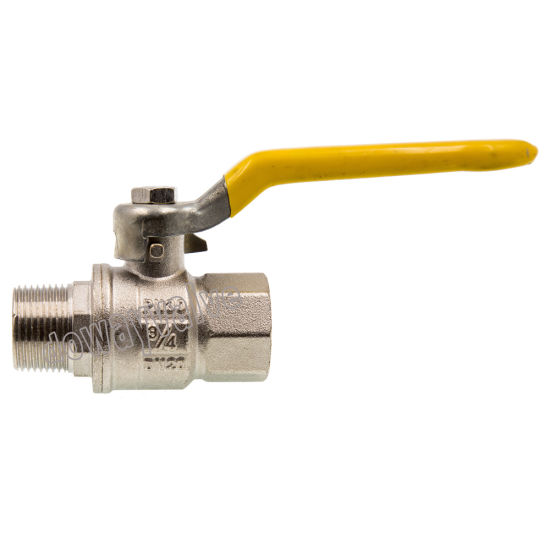
Proprietary systems often require highly specific integrations. For example, your machinery might demand a precise pressure and threading combination to function properly. You could specify a pn30 female gas ball valve dw configuration to mate exactly with your existing manifold. This eliminates the need for bulky adapters, reduces potential leak paths, and streamlines the installation process.
Actuation and Handle Modifications
Standard manual levers pose ergonomic and safety challenges in complex industrial setups. You can customize handle dimensions to meet precise torque requirements. Extended levers assist operators in turning large, high-pressure units safely. Alternatively, you can specify specialized lockout-tagout (LOTO) mechanisms. Custom LOTO designs ensure compliance with OSHA regulations by physically preventing unauthorized actuation during maintenance.
Automated industrial control systems require entirely different modifications. You will need custom ISO 5211 mounting pads directly integrated into the valve body. This allows for the direct attachment of pneumatic or electric actuators. Direct mounting eliminates the need for external brackets, reducing hysteresis and improving positional accuracy during high-cycle operations.
The Compliance Reality: Navigating Safety and Certifications
Certification Maintenance
Modifying pipeline components carries significant regulatory risks. Altering the body wall thickness or changing the seat material usually voids existing safety certifications. A custom assembly must still pass rigorous testing to earn crucial approvals from agencies like CSA, UL, or FM Global. Operating uncertified equipment in combustible pipelines invites massive fines and liabilities.
You must work closely with your manufacturing partner during the design phase. Reputable engineers design custom units to meet or exceed base code requirements from the start. Once they finalize the prototype, they submit the specific custom assembly for independent certification. This process adds time to your project timeline, but you cannot skip it under any circumstances.
Fugitive Emissions Testing
Environmental regulations grow stricter every year regarding pipeline leakages. Standard designs often fail to meet modern EPA requirements over a prolonged lifecycle. Custom designs must account for these strict fugitive emissions standards. Engineers tackle this by redesigning the stem packing area.
They often incorporate live-loaded packing systems using Belleville washers. These washers maintain constant pressure on the stem seals, compensating for wear and thermal expansion over high-cycle usage. By customizing the stem seal architecture, you ensure the equipment meets ISO 15848-1 standards for fugitive emissions. This proactive customization prevents hazardous gas leakage and keeps your facility environmentally compliant.
Documentation and Traceability
Compliance audits demand comprehensive paperwork. Inspectors require absolute proof of material origins and testing protocols. You must request Mill Test Reports (MTRs) for every custom component you install. These documents verify the exact chemical composition and mechanical properties of the raw metals used in your equipment.
Material traceability ensures complete transparency. Reputable manufacturers stamp each valve body with heat codes correlating directly to the MTRs. If a specialized alloy fails in the field, this traceability allows you to isolate the defective batch immediately. Proper documentation satisfies safety auditors and provides peace of mind for your engineering team.
How to Vet a Custom Gas Ball Valve Supplier
Engineering and Prototyping Capabilities
The success of a custom project relies entirely on the technical competence of your manufacturing partner. You should evaluate their engineering department before discussing prices. Your chosen gas ball valve supplier must offer collaborative CAD design services. They should translate your rough specifications into precise 3D models quickly.
Furthermore, they must utilize Finite Element Analysis (FEA) software. FEA simulates extreme pressure and thermal stress on the digital model, identifying potential failure points before physical production begins. After finalizing the digital design, the supplier should offer rapid prototyping. Receiving a physical 3D-printed or machined prototype allows your team to verify spatial fitment and actuation clearances.
Quality Assurance Infrastructure
A strong design means nothing without rigorous quality control during manufacturing. You must verify the supplier's in-house testing infrastructure. Do they rely on third-party labs, or do they test components on the factory floor? Look for the following key QA/QC indicators:
- In-house Hydrostatic and Pneumatic Testing: They must pressure-test every unit beyond its rated capacity to ensure shell strength and seat integrity.
- Helium Leak Testing: For ultra-high purity or toxic gas applications, helium mass spectrometry detects microscopic leaks standard pneumatic tests miss.
- ISO 9001 Certification: This baseline certification guarantees they follow standardized, repeatable quality management protocols across all production phases.
- Metallurgical Analysis: They should possess positive material identification (PMI) scanners to verify alloy compositions upon receiving raw materials.
Supply Chain and Scalability
A supplier might excel at building a single perfect prototype but fail to deliver volume. You must assess their ability to scale production. Transitioning from a low-volume custom run to full-scale manufacturing requires robust supply chain management. Ask them about their raw material sourcing networks and machining capacities.
They must maintain strict part consistency across a run of a thousand units. Variations in machining tolerances lead to erratic performance in the field. Ensure they use advanced CNC machining centers and automated inspection routines. A reliable partner scales up production without compromising lead times or introducing dimensional defects.
Implementation Risks and Cost-Benefit Analysis
Upfront Tooling vs. Long-Term ROI
Custom manufacturing invariably carries higher initial costs. You must transparently address Non-Recurring Engineering (NRE) fees and custom tooling expenses within your budget. Developing new forging dies or programming unique CNC toolpaths requires significant upfront capital. Procurement teams often balk at these numbers when comparing them to off-the-shelf prices.
However, you must analyze these costs through the lens of long-term operational savings. A standard component placed in a severe service environment will fail repeatedly. The continuous costs of maintenance labor, replacement parts, and most importantly, system downtime, quickly eclipse initial custom tooling fees. Investing in a purpose-built design dramatically extends the replacement cycle. This preventative approach yields a superior return on investment by keeping your facility running without unexpected interruptions.
Rollout Considerations
Integrating a newly customized component into an existing pipeline requires careful planning. You cannot simply install the new part and walk away. Best practices dictate updating your Standard Operating Procedures (SOPs) immediately. The custom unit might require different torque values for actuation or specific lubrication schedules for the specialized seals.
You must retrain your maintenance staff to handle the new equipment properly. Additionally, update all Piping and Instrumentation Diagrams (P&ID) to reflect the new custom specifications. Proper documentation and team alignment prevent mishandling and ensure the custom investment performs optimally over its intended lifespan.
Next-Step Actions
When you decide to pursue a custom design, preparing a comprehensive initial Request for Quote (RFQ) accelerates the process. Vague requests lead to extended engineering delays. Gather precise operational data before contacting a manufacturer. Follow these steps to prepare your RFQ:
- Define Media and Environment: List the exact gas composition, concentration levels, and external ambient conditions (e.g., corrosive salt spray exposure).
- Determine Flow Dynamics: Provide expected flow rates, maximum allowable pressure drops, and typical operating pressures.
- Establish Thermal Limits: Detail the minimum and maximum temperatures the system will experience during both normal operation and upset conditions.
- Specify Spatial and Connection Constraints: Provide precise dimensional limits and exact threading or flange requirements.
Conclusion
Upgrading to a custom design represents a critical investment in your system's integrity, environmental safety, and long-term reliability. Standard components simply cannot withstand the harsh realities of aggressive media, extreme thermal cycles, or tight spatial limits. By evaluating your precise operational thresholds, you can prevent costly downtime and eliminate hazardous fugitive emissions. Take the time to properly define your material needs and navigate the certification landscape carefully.
We encourage technical buyers and engineering leads to act proactively. Assemble your specific operational data, detail your environmental constraints, and reach out to a specialized manufacturing partner today. A collaborative engineering review will quickly determine the feasibility and long-term financial benefits of integrating a purpose-built solution into your infrastructure.
FAQ
Q: Can I use a water ball valve for natural gas if the pressure ratings match?
A: No. Water and gas handle entirely differently. Water valves utilize EPDM seals, which degrade rapidly upon contact with combustible gases, leading to dangerous leaks. Gas components require specialized resilient seats like PTFE or NBR. Furthermore, gas equipment must pass stringent pneumatic leak testing and adhere to strict legal codes, including anti-static and blowout-proof stem requirements. Using water components for gas violates safety regulations.
Q: What is the typical lead time for a custom gas ball valve prototype?
A: You can expect a typical lead time ranging from 4 to 12 weeks for a custom prototype. This timeline depends heavily on the complexity of the required tooling, the availability of specialized alloys, and the scope of custom engineering. Rapid prototyping using 3D printing can shorten initial spatial fitment tests to just a few weeks.
Q: Do custom valves come with CSA or UL approval?
A: Reputable manufacturers design custom components following core CSA or UL safety standards. However, altering standard dimensions or materials typically voids existing baseline certifications. The specific custom assembly will usually require an independent submission for testing and certification before you can legally install it in a regulated gas pipeline system.
