How Do Material Options Affect Water Meter and Accessaries?
Views: 0 Author: Site Editor Publish Time: 2026-09-18 Origin: Site


Selecting the right material for utility metering goes beyond a simple baseline cost calculation. It acts as a critical variable in system longevity, compliance, and overall infrastructure health. Incorrect material specification often causes galvanic corrosion. It can lead to thread stripping during installation. You might also face non-compliance against safe drinking water regulations. Premature failure frequently happens due to environmental stress. Evaluating brass, engineered polymers, and stainless steel against specific deployment environments remains essential. Procurement managers and engineers must analyze these options closely. They need precise data to minimize ongoing maintenance liabilities. You will learn how different materials impact durability and pressure tolerances. We will explore strict regulatory mandates governing drinking water. Finally, we provide actionable guidance to help you secure reliable, compliant components for your utility network.
Key Takeaways
- Material choice directly determines a meter's maximum operating pressure, temperature tolerance, and resistance to environmental degradation.
- Regulatory compliance (such as NSF/ANSI 61 and 372 for lead-free drinking water) heavily dictates the viability of specific metal alloys in residential systems.
- Mixing materials between the meter body and adjacent components requires strict mitigation of galvanic corrosion and mechanical stress.
- Vetting your water meter and accessaries supplier for material traceability and certified testing documentation is as critical as the product specification itself.
The Business Impact of Material Selection on Utility Infrastructure
Utility managers must evaluate materials based on long-term lifecycle budgets rather than just upfront price tags. Cheaper materials might offer immediate savings. However, they frequently lead to expensive premature replacements. Utility companies spend thousands of dollars addressing non-revenue water (NRW). NRW happens when inferior meter bodies crack under pressure. Water leaks silently into the surrounding soil. Selecting a highly durable material prevents these expensive leakages. It also reduces the heavy labor costs associated with emergency field repairs.
Regulatory compliance introduces another massive layer of liability. Governments enforce strict mandates regarding drinking water safety. The Safe Drinking Water Act requires components to meet "lead-free" standards. Industry guidelines like AWWA standards dictate stringent material testing protocols. Installing non-compliant materials exposes utilities to severe legal penalties. You must verify all metallic alloys meet these exact safety parameters before deployment.
Environmental stressors constantly attack utility infrastructure. Direct-bury applications place meters into contact with aggressive soil chemistry. High soil acidity rapidly degrades unprotected metals. Above-ground installations face relentless UV exposure. Sun exposure causes standard plastics to become brittle over time. Water quality also dictates material survival rates. Hard water scaling ruins internal measuring chambers. Particulate abrasions slowly destroy softer polymers. You must align your material choice directly against these specific operational stressors.
Best Practice: Always test local soil pH and water hardness before approving a material standard for your district. This data guides you toward the most resilient option.
Evaluating Primary Materials for Meter Bodies
Engineers primarily rely on three distinct material categories. Each category offers unique structural advantages and distinct vulnerabilities. You must weigh these factors against your specific network demands.
Lead-Free Brass and Bronze Alloys
Brass and bronze remain the industry standard for utility metering. Manufacturers have utilized these metals for decades. They deliver exceptional structural integrity under extreme conditions. Installers rarely worry about cross-threading these durable connections. Metal meters easily handle high burst pressure limits.
- Pros: Exceptional structural integrity, long-term durability, highly resistant to cross-threading, superior burst pressure limits.
- Risks: Higher upfront purchase costs, highly susceptible to scrap theft, requires strict metallurgical verification for lead-free compliance.
Common Mistake: Failing to verify the exact alloy composition. Some imported brass still contains trace lead amounts exceeding residential safety limits.
Engineered Plastics and Composites
Modern engineering introduced highly durable polymer composites. These plastics offer an incredibly cost-effective alternative to heavy metals. Composites remain completely immune to galvanic corrosion. They also resist internal mineral scaling effectively. Scrappers ignore plastic meters, eliminating theft risks entirely. Installers appreciate the lightweight nature for safer, faster fieldwork.
- Pros: Highly cost-effective, immune to galvanic corrosion, zero scrap theft value, resists mineral scaling, lightweight design.
- Risks: Vulnerable to thread damage from over-torquing, UV degradation in direct sunlight, lower maximum temperature thresholds.
Best Practice: Only deploy composites in subterranean vaults or shaded areas to prevent UV embrittlement.
Stainless Steel and Cast Iron
Industrial applications frequently demand heavy-duty materials. Stainless steel offers elite corrosion resistance. It survives highly aggressive chemical environments easily. Cast iron serves high-volume commercial applications perfectly. These heavy metals handle massive flow rates without structural fatigue.
- Pros: Elite corrosion resistance (stainless steel), handles extreme high-volume stress (cast iron), maximum physical durability.
- Risks: Stainless steel remains cost-prohibitive for standard residential rollouts. Cast iron requires robust internal and external epoxy coatings to prevent rusting.
Table 1: Material Comparison Matrix
| Material Category | Primary Benefit | Primary Vulnerability | Best Application Scenario |
|---|---|---|---|
| Lead-Free Brass | High physical durability | Theft risk and cost | Standard residential and light commercial |
| Engineered Composite | Zero corrosion and low cost | Thread stripping risk | Corrosive soil environments |
| Stainless Steel | Elite chemical resistance | High acquisition cost | Aggressive industrial water systems |
| Cast Iron | High-volume capacity | Requires epoxy coating | Large main lines and bulk metering |
How Materials Dictate Water Meter and Accessaries Specifications
Material choices directly influence mechanical compatibility across the entire pipeline. Matching or intentionally mismatching materials impacts the physical installation process heavily. You cannot simply thread a heavy brass coupling into a soft plastic body without care. The harder metal easily strips the softer polymer threads. Installers must apply exact torque measurements. Understanding these mechanics ensures you define accurate water meter and accessaries specifications for field teams.
Material yield strength changes pressure and flow tolerances. Composite meters typically require specific pressure-reducing setups in high-PSI zones. A composite body might warp if subjected to sudden water hammer effects. Metal bodies absorb these shockwaves much better. Engineers must adjust their system designs based on the chosen material. You must align accessory strength directly with the meter body limitations.
Mitigating galvanic corrosion requires careful engineering logic. Galvanic corrosion occurs when two dissimilar metals connect in a conductive environment. Connecting a new brass meter directly to legacy galvanized piping causes rapid deterioration. The less noble metal sacrifices itself and rusts away. Engineers solve this by isolating dissimilar metals. You can use dielectric unions to break the electrical current. Specialized composite tailpieces also serve as excellent isolators. Proper isolation strategies extend the entire system's operational lifespan significantly.
Accessory Integration: Sizing, Valves, and Fittings
Certain high-torque accessories must retain metal construction. Even if you choose a composite meter body, adjacent valves endure massive mechanical stress. Flanges and couplings handle constant ground shifting and pipeline settling. High-quality metal fittings absorb this structural tension. Using plastic couplings on high-pressure lines often leads to stress fractures.
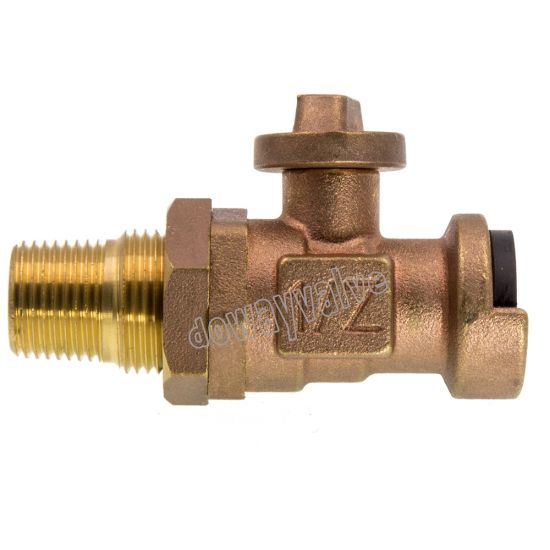
A reliable dual-check isolation valve plays a pivotal operational role. We often spotlight the brass valve water meter valve dw for its exceptional performance. This specific valve maintains system pressure flawlessly. It prevents contaminated water from flowing backward into the clean municipal supply. It also enables incredibly safe meter swap-outs. Technicians can isolate the local line without requiring massive municipal shutoffs. The robust brass construction ensures the valve never seizes under high pressure.
Seals and gaskets serve as the unsung heroes of integration. You must interface the meter body with various metallic or plastic accessories properly. Always rely on high-grade EPDM or specialized rubber elastomers. These premium gaskets absorb thermal expansion effortlessly. They maintain a watertight, long-term seal even under rapidly fluctuating temperatures. Cheap rubber gaskets degrade quickly and cause micro-leaks. Investing in quality elastomers protects the entire water meter and accessaries ecosystem.
Common Mistake: Reusing old gaskets during a meter upgrade. Old elastomers lose their memory and fail to seal against new flange surfaces. Always install brand new EPDM gaskets.
Selecting a Water Meter and Accessaries Supplier: A Due Diligence Checklist
Procurement teams must vet their manufacturing partners rigorously. The right partner provides verifiable data and long-term support. Follow this specific due diligence checklist when evaluating potential partners.
- Demand Material Traceability: Ask for clear documentation proving metallurgical composition. Reliable manufacturers proudly display ISO certifications. They also provide active NSF registry listings. This documentation guarantees your components remain lead-free and structurally sound.
- Evaluate Warranty Alignment: Review the warranty terms carefully. Ensure the supplier's warranty duration correlates with your expected lifecycle. A reliable warranty should cover environmental degradation relevant to your specific climate and water conditions.
- Verify Ecosystem Availability: Ensure your partner provides a fully compatible ecosystem. They should manufacture matching couplings, flanges, and valves. Sourcing everything from a dedicated water meter and accessaries supplier eliminates mechanical mismatches. It helps you avoid the severe risks of piecemeal third-party integrations.
Best Practice: Ask your supplier for independent laboratory testing reports. In-house data is helpful, but third-party verification provides absolute certainty regarding material limits.
Conclusion
No single material stands universally superior for every utility application. The optimal choice depends strictly on your unique deployment environment. You must balance budget constraints, local compliance requirements, and environmental stressors carefully. Brass offers unmatched durability, while composites deliver exceptional value in corrosive soils. Stainless steel handles aggressive chemicals, and cast iron manages massive commercial flows.
Procurement teams should adopt a strategic testing approach. We strongly advise conducting a limited pilot rollout first. Request detailed material specification sheets from your shortlisted vendors. Install a small batch of meters in your most challenging soil or water conditions. Test field compatibility thoroughly before committing to bulk ordering. This cautious, data-driven approach guarantees long-term infrastructure success and minimizes future replacement headaches.
FAQ
Q: What is the expected lifespan difference between brass and composite water meters?
A: Both materials easily achieve a 15-20 year lifespan under normal operating conditions. Composite meters excel in highly corrosive soil environments where metals typically degrade. However, brass handles physical installation stress and extreme temperature fluctuations much better over time.
Q: How do I ensure my water meter and accessaries are lead-free compliant?
A: You must look for explicit industry certifications. Check for NSF/ANSI 372 compliance markings. Always advise your procurement team to request independent laboratory testing reports directly from the manufacturer to verify the exact alloy composition.
Q: Can I use brass accessories with a plastic water meter body?
A: Yes, you can combine them. However, you must emphasize the necessity of exact torque specifications during installation. The harder brass threads can easily strip the softer composite threads if technicians over-tighten the connections.
