How Do You Choose Gunmetal Ferrule Valves and Bronze Saddle?
Views: 0 Author: Site Editor Publish Time: 2026-08-30 Origin: Site


Selecting underground water main connections presents a high-stakes procurement challenge for utilities globally. Aging infrastructure faces immense pressure daily. Failed municipal or industrial pipeline taps lead to severe consequences for communities. You risk massive non-revenue water (NRW) loss. Expensive emergency excavation becomes unavoidable. Disruptive service outages anger local residents and businesses. Decision-makers must evaluate these underground systems carefully. For professionals assessing gunmetal ferrule valves and bronze saddle assemblies, the choice demands strict technical scrutiny. Material integrity against aggressive soil conditions remains critical. Precise dimensional compatibility ensures leak-free, permanent fits. Rigorous supplier vetting prevents catastrophic, hidden failures. We built this guide to help you navigate these complex choices effectively. It breaks down the specific technical criteria required for regulatory compliance. It also details the commercial factors you need to source reliable assemblies. You will learn how to identify top-grade materials quickly. You will discover exactly how to evaluate potential manufacturing partners for your next major infrastructure project.
Key Takeaways
- Material properties dictate lifespan: Gunmetal (LG2/CC491K) and bronze resist dezincification and galvanic corrosion far better than standard brass, making them mandatory for direct-bury applications.
- Specification alignment is non-negotiable: Pressure ratings (typically PN16), thread standards, and saddle strap compatibility with the main pipe (HDPE, DI, PVC) must match your local municipal codes.
- Supplier transparency mitigates risk: Sourcing requires verifying foundry certifications, hydro-testing protocols, and OEM track records to avoid low-grade alloy substitution.
The Business Case for Gunmetal and Bronze in Underground Water Mains
Underground valves and saddles face incredibly harsh environmental realities. They endure constant exposure to highly acidic soils. They battle stray electrical currents from nearby power grids daily. High-pressure water flows exert relentless mechanical stress on internal components. Standard plumbing materials degrade rapidly in these buried environments. Common commercial brass often becomes brittle and shatters. You simply cannot rely on inferior metals for critical buried infrastructure.
Dezincification acts as a major, silent threat underground. This chemical process leaches zinc directly out of brass alloys over time. It leaves behind a weak, porous, sponge-like copper shell. To combat this phenomenon, modern utilities demand Dezincification Resistant (DZR) materials. Gunmetal provides the ultimate defense mechanism. It is an optimized alloy of copper, tin, zinc, and lead. Tin adds remarkable structural strength to the casting. Lead significantly improves machining precision during manufacturing. Together, they create an incredibly robust, durable structure. Strict industry standards mandate gunmetal ferrule valves and bronze components. They actively prevent structural decay in sprawling water utility networks.
Procurement teams often weigh initial pricing against long-term operational risk. Gunmetal and premium bronze carry a slightly higher upfront price tag. However, failing underground valves trigger massive, cascading financial losses. Emergency deep-trench excavations cost thousands of dollars per incident. Sudden main water shutdowns disrupt local economies. Replacing inferior materials drains municipal maintenance budgets very quickly. Investing in superior metallurgy completely eliminates these expensive emergencies. It secures the distribution network for decades.
Key Gunmetal Ferrule Valves and Bronze Saddle Specifications
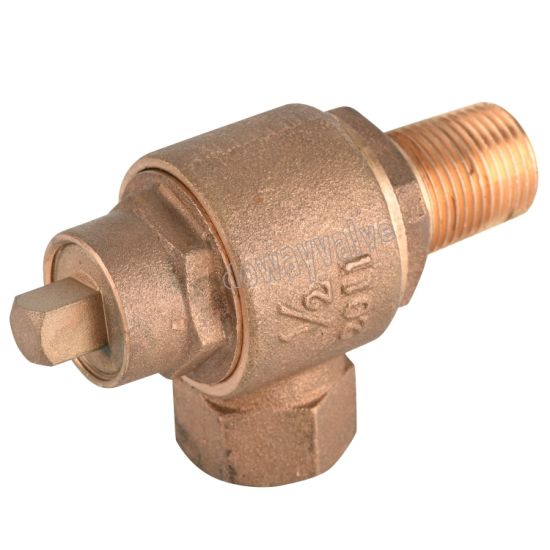
Engineers must look far beyond basic dimensional measurements. Reviewing gunmetal ferrule valves and bronze saddle specifications requires deep metallurgical analysis. Core performance metrics dictate eventual operational success. You need components built strictly to global manufacturing standards.
Standard compliance acts as your primary quality assurance lens. For exact alloy composition, you must verify adherence to BS EN 1982. The specific CC491K grade applies directly to structural gunmetal. This certification guarantees the correct ratio of copper, tin, zinc, and lead. Design and testing standards also matter heavily. Component functionality must align perfectly with BS 8537. Many international regions also accept AWWA equivalent standard frameworks.
Operating pressures demand close, careful attention during specification. Most underground potable water systems require a minimum PN16 rating. This designation ensures continuous, safe operation up to 16 bar. Pressure surges and water hammer events require this safety margin. Temperature tolerances must also accommodate local seasonal climate extremes. You must ensure cast materials handle varying water temperatures safely.
Seamless pipe integration depends entirely on precise threading. Evaluate inlet and outlet configurations very carefully before ordering. Common global standards include BSP and NPT thread profiles. Banjo configurations provide crucial flexibility for service pipe connections. They allow easy, 360-degree directional adjustments during tight trench installations. This prevents unnecessary stress on the connecting pipes.
Table: Material and Standard Comparison Chart
| Component | Recommended Material | Compliance Standard | Pressure Rating |
|---|---|---|---|
| Ferrule Valve Body | Gunmetal (CC491K) | BS EN 1982 / BS 8537 | PN16 |
| Saddle Body | Bronze or Gunmetal | BS 1400 / AWWA | PN16 |
| Fasteners/Straps | Stainless Steel (316) | ISO 3506 | N/A |
Evaluating System Compatibility and Installation Realities
The under-pressure tapping process requires perfect mechanical coordination. The saddle must interact seamlessly with the active ferrule valve. Live tapping happens while the water main remains fully pressurized. This critical procedure demands precision-engineered threads and highly secure seals. A mismatched or poorly machined assembly will leak immediately upon installation.
Saddle designs must match their specific host pipes perfectly. You will encounter various pipe materials in the field daily.
- Ductile Iron (DI): Requires robust, rigid bolted saddles to grip the hard surface securely.
- Asbestos Cement (AC): Needs careful, even pressure distribution to prevent dangerous material cracking.
- Polyvinyl Chloride (PVC): Demands softer handling and wider straps to avoid localized stress points.
- High-Density Polyethylene (HDPE): Requires specialized wide straps and contoured rubber gaskets to prevent pipe deformation.
Installation teams must aggressively mitigate specific field risks. Over-torquing remains a very common, destructive mistake. Excessive wrench force distorts the bronze saddle body. It permanently compromises the internal rubber sealing gaskets. Galvanic corrosion poses another hidden, long-term threat. Crews often pair bronze saddles with stainless steel mounting straps. You must strictly enforce the use of specialized isolation washers. Direct physical contact between these dissimilar metals causes rapid, catastrophic decay.
Always establish clear, measurable success criteria for your crews. Demand full hydrostatic testing before backfilling the dirt trench. The assembled connection must achieve a flawless, bubble-tight seal. A tiny weep will continuously wash away surrounding soil over time. This erosion eventually leads to dangerous sinkholes and massive pipe collapse.
How to Vet a Gunmetal Ferrule Valves and Bronze Saddle Supplier
Sourcing directly from a specialized, proven manufacturer offers massive commercial benefits. A dedicated gunmetal ferrule valves and bronze saddle supplier significantly reduces intermediary wholesale markups. Factory-direct relationships drastically improve quality assurance and product traceability. You gain direct, immediate access to senior engineering support teams.
Overseas procurement requires extremely strict vetting criteria. When you evaluate a china factory oem high quality 1st-tier partner, demand documented proof always. Do not accept vague verbal promises regarding material quality.
First, verify their in-house foundry operations thoroughly. Internal foundries ensure strict, continuous control over raw material mixes. It actively prevents dangerous scrap metal dilution. Second, mandate third-party material audits frequently. You need certified spectrometer testing reports for every single batch. This scientific analysis guarantees the exact requested alloy composition. Third, insist on 100% factory pressure testing. The facility must hydro-test every individual valve before packing and shipment. Statistical batch-sampling remains entirely unacceptable for critical municipal infrastructure.
Top-tier suppliers offer incredibly strong customization capabilities (OEM/ODM). They can adjust mounting strap lengths easily to suit local pipes. They frequently modify thread types to match specific regional plumbing codes. Many factories can even cast custom municipal branding directly onto the valve body. This deters scrap theft and significantly improves long-term asset tracking.
Shortlisting and Procurement Next Steps
Never buy underground valves based on a marketing spec sheet alone. The modern procurement process demands rigorous, skeptical documentation review. You must request official Mill Test Certificates (MTC) immediately. Ask for highly detailed dimensional engineering drawings. Demand current, independently verified ISO 9001 and ISO 14001 compliance documents. These papers prove basic manufacturing consistency and environmental responsibility.
Next, enter a strict sample validation phase. Always order a small prototype batch first before bulk purchasing. Follow these specific, hands-on testing steps:
- Test all thread tolerances using professionally calibrated plug and ring gauges.
- Inspect casting smoothness visually and physically across the entire valve body.
- Check meticulously for dangerous sand holes, cracks, or hidden metal porosity.
- Perform a full mechanical assembly test on a pressurized, high-stress test rig.
Your final procurement decision matrix must weigh multiple interconnected factors. Raw unit cost represents just one single metric. You must carefully analyze historical factory defect rates. Evaluate the exact duration and specific conditions of the warranty terms offered. Assess the supplier's responsiveness to your highly technical engineering inquiries. A cheap valve ultimately costs a fortune if the supplier ignores your critical support emails.
Conclusion
Selecting reliable saddles and valves demands strict, unwavering technical discipline. You must adhere to proven, globally recognized metallurgical standards. Mechanical compatibility with various host pipes ensures safe, efficient live-tapping operations. Utility managers and procurement engineers hold immense civic responsibility. You can eliminate vulnerable weak links in sprawling water distribution networks. Follow a few straightforward, highly effective action steps moving forward.
- Prioritize verified specifications like BS EN 1982 for all cast gunmetal components.
- Demand rigorous, transparent quality control documentation from OEM partners before ordering.
- Mandate 100% individual hydro-testing and spectrometer analysis for every production batch.
- Evaluate factory communication and responsiveness as a core indicator of future reliability.
FAQ
Q: What is the difference between gunmetal and standard brass for ferrule valves?
A: Gunmetal contains a higher percentage of tin and less zinc than standard brass. This specific composition makes it highly resistant to dezincification. It withstands corrosion in harsh underground environments perfectly. Standard brass becomes brittle and fails rapidly under these exact same conditions.
Q: Can bronze saddles be used on plastic pipes like PVC or HDPE?
A: Yes, you can use them on plastic pipes. However, the saddle requires specific design modifications. It needs the correct curvature and strap configuration. Wide straps and specific rubber gaskets distribute the load safely. This prevents the saddle from crushing or deforming the softer plastic pipe.
Q: What information should I provide to a supplier to get an accurate quote?
A: You must specify the main pipe material and outer diameter. Include the required service pipe connection size and thread type. State your required working pressure, such as PN16. Finally, list the specific international manufacturing standards you need, like BS 8537 or BS EN 1982.
Q: How do I verify the quality of an OEM factory overseas?
A: Start by requesting detailed material composition reports, specifically spectroscopy. Ask for batch pressure testing certificates and updated ISO certifications. Ideally, you should order a sample batch. Submit these samples for localized third-party destructive testing. Do this before you commit to any bulk volume orders.
