How Do You Compare Check Valve Strainer?
Views: 0 Author: Site Editor Publish Time: 2026-09-10 Origin: Site


Key Takeaways
- System Protection First: The primary ROI of a correctly specified check valve strainer is measured in avoided damage to downstream pumps, meters, and control valves.
- Specification Overlap is Critical: Comparing options requires aligning mesh micron ratings with the specific cracking pressure requirements of the system.
- Material Dictates Application: Sourcing choices (e.g., bronze vs. stainless steel) must be strictly mapped to fluid corrosivity and environmental compliance.
- Supplier Vetting Reduces Risk: Evaluating a check valve strainer supplier requires analyzing their testing protocols, not just unit pricing.
Frame the Decision: Success Criteria and Failure Risks
Identify the core business problem before evaluating specific product models. Industrial fluid rarely flows perfectly clean. Sand, scale, and pipe debris easily bypass standard unprotected check valves. This contamination eventually scores the internal valve seat. Once the seating surface degrades, backflow becomes inevitable. Unplanned system downtime follows quickly as contamination spreads backward into sensitive areas. Conversely, installing a strainer screen that is too fine presents another severe operational risk. Over-straining creates massive pressure drops across the valve assembly. The restricted flow starves downstream pumps of necessary fluid. Pump starvation immediately triggers cavitation. Cavitation sounds like marbles rattling inside your pump casing. These collapsing vapor bubbles violently destroy impellers and wreak havoc on mechanical seals, causing catastrophic equipment failure. Procurement and engineering teams must define strict, measurable success criteria to avoid these failures.- Calculable Flow Coefficient (Cv): You need predictable, verified head loss data. The valve must accommodate your maximum expected flow rate without choking the system or causing turbulence.
- Zero-Leakage Seating: The internal check mechanism must seal perfectly upon closure. It must maintain this tight seal under the specific back-pressure generated by your unique application.
- Accessible Maintenance Points: Maintenance teams require fast, easy access. They need accessible strainer blow-off ports or easily removable baskets for regular cleanings without dismantling the entire pipe network.
Core Configurations: Combined Units vs. Inline Separates
Engineers generally choose between two primary configuration paths when designing a filtration and backflow system. You can select integrated foot valves or deploy separate inline combinations. Your choice directly dictates the installation footprint and dictates future maintenance workflows.Integrated Foot Valves with Strainers (End-of-Line)
These integrated units sit at the absolute end of a suction line. They excel in specific suction lift applications. You will frequently find them drawing fluid from open sumps, holding tanks, or deep wells. The durable external screen prevents large debris from entering the suction pipe. Simultaneously, the internal check valve mechanism maintains the pump prime when the motor shuts off, preventing fluid from draining back down into the source. The primary comparison factor here involves maintenance accessibility. Integrated foot valves save significant upfront space. They simplify the initial piping layout. However, submerged maintenance proves incredibly difficult. Technicians often must deploy cranes or hoists to pull the entire line out of the sump just to clean a clogged screen.Y-Strainer and Check Valve Combinations (Inline)
Many closed-loop piping systems rely on discrete inline configurations. You install a dedicated Y-strainer immediately upstream of a standard inline check valve. This setup works beautifully for both horizontal and vertical pipeline orientations. This dual-component approach obviously requires a larger installation footprint. It also involves more piping connections, which introduces potential leak points. Yet, it offers a massive operational advantage for maintenance teams. You can equip the Y-strainer component with an integrated blow-off valve. Operators can simply open this valve to flush out accumulated debris in seconds. They do not need to depressurize the main line. They do not need to dismantle the piping infrastructure or pause major production processes.The Decision Node
You must evaluate your specific site conditions. Consider exactly how often the fluid requires filtering. Weigh your installation orientation (vertical versus horizontal) against your required maintenance frequency. High-debris fluids demand inline setups for rapid, daily cleaning. Conversely, deep-well suction lines almost always necessitate integrated end-of-line units due to spatial restrictions.Table 1: Configuration Comparison Summary
| Configuration Type | Primary Application | Maintenance Access | Physical Footprint |
|---|---|---|---|
| Integrated Foot Valve | Sump pumps, deep water wells | Submerged, requires full line removal | Compact, highly integrated single-unit |
| Inline Y-Strainer + Valve | Closed-loop industrial piping systems | Highly accessible, allows quick blow-off flushing | Larger, requires multi-component spacing |
Critical Check Valve Strainer Specifications for Sizing
Proper sizing dictates system efficiency and pump health. You cannot guess valve dimensions based on the nominal pipe diameter alone.Cracking Pressure and Head Loss
Every check valve requires a minimum upstream fluid pressure to push the internal disc open. We call this the cracking pressure. You must carefully compare this cracking pressure against the natural flow restriction introduced by the strainer screen. A heavy internal spring requires significant fluid force to open. Combine that heavy spring with a highly restrictive fine mesh, and your total head loss spikes dramatically. Your pumps will work much harder to push fluid through the assembly, wasting energy and accelerating wear.Screen Mesh and Perforation Sizing
Filtration precision relies entirely on the selected screen mesh. You must strictly balance the open area ratio (OAR) with your target particulate size. The OAR compares the total open hole space against the solid screen material. A higher OAR means better flow. Specifying a 20-mesh screen yields very different hydraulics than specifying a 100-mesh screen. A 20-mesh screen catches larger debris like pebbles, scale, or rust flakes. It provides a high OAR and minimal flow restriction. In contrast, a 100-mesh screen captures fine sand and silt. However, it drastically alters system hydraulics. It restricts fluid flow heavily and clogs much faster, requiring constant monitoring.Reviewing Manufacturer Data
Always scrutinize the published product sheets before making a final selection. When reviewing official check valve strainer specifications, look for specific performance validation data.- Flow Curves: Verify the expected pressure drop at your normal, everyday operating flow rate. Ensure it aligns with your pump curves.
- Maximum Working Pressure: Ensure the valve body handles your system's absolute peak pressure spikes, including water hammer events.
- Temperature Thresholds: Confirm the internal elastomer seals will not melt or degrade at your maximum expected fluid temperature.
Material Compatibility and Sourcing Realities
Your operating environment dictates your material selection. A mismatched valve body or internal seal will corrode rapidly, leading to dangerous leaks.Evaluating Body and Screen Materials
Cast iron and ductile iron remain the undisputed industry standards for basic industrial applications. Ductile iron provides excellent impact resistance. They both provide cost-effective solutions for standard water lines. They perform exceptionally well in non-corrosive, ambient-temperature environments. However, chemical processing plants demand significantly higher durability. Food-grade applications and highly corrosive acidic environments require stainless steel bodies. Engineers typically specify 304 or 316 stainless steel for these harsh conditions. Stainless steel completely resists chemical attack, prevents pitting corrosion in high-chloride environments, and prevents downstream product contamination.Navigating Specialized Imports and Applications
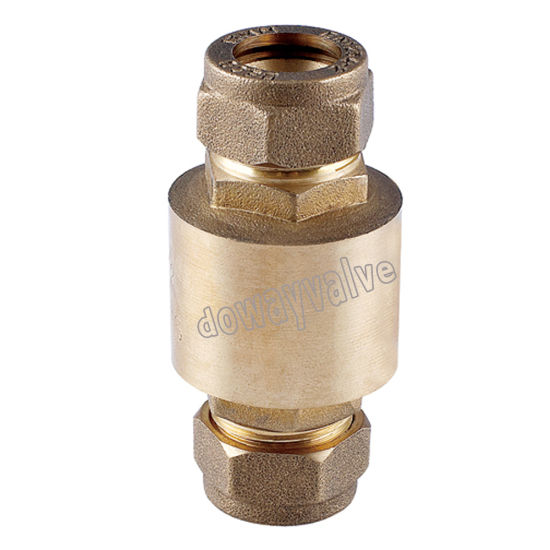
Global sourcing offers substantial financial value if you vet the products correctly. You must constantly evaluate cost-to-quality ratios. For example, municipal water projects face incredibly strict federal regulations. You might assess a specialized china factory bronze check valve dw designed specifically for Domestic Water (DW) or deep well municipal uses. These specific bronze valves must meet stringent lead-free compliance standards to ensure public health. They must also deliver marine-grade corrosion resistance to handle varied water chemistries. Residential and municipal applications mandate these exact material certifications to ensure safety. Evaluating global options requires confirming these material standards upfront before considering the price.Seal and Seat Materials
The internal soft goods usually fail long before the thick metal body. You must compare seal materials based strictly on fluid temperature and chemical compatibility.- EPDM: Excellent for hot water, mild acids, and steam applications. It resists environmental weathering and ozone effectively. Do not ever use it with petroleum-based oils, as it will swell and fail.
- NBR (Buna-N): The absolute standard choice for oil, fuel, and other petroleum-based fluids. It handles moderate temperatures well and resists abrasion.
- PTFE (Teflon): Delivers ultimate, unmatched chemical resistance. It handles extreme temperature fluctuations perfectly but requires highly machined, precise seating surfaces due to its inherent rigidity.
Vetting Your Check Valve Strainer Supplier for Long-Term Reliability
A well-engineered fluid system requires a trustworthy manufacturing partner. Unit pricing alone tells you absolutely nothing about component longevity or reliability.Quality Assurance and Testing Protocols
A reliable check valve strainer supplier must provide hard evidence of their factory testing capabilities. They should routinely conduct rigorous hydrostatic shell testing to verify the body casting has no hidden voids. They must also perform dedicated, pressurized seat leakage testing. Ask them directly if they adhere to global testing standards like API 598 or ISO 5208. These protocols guarantee the valve will safely hold system pressure without catastrophic external or internal leaks.Supply Chain and Customization Capabilities
Industrial fluid processes rarely fit into perfect, standard boxes. You might need specialized engineering configurations. Assess the supplier's actual ability to provide custom mesh liners for unique, site-specific particle sizes. Check if they can easily modify cracking springs to accommodate low-pressure fluid loops. They must also maintain a robust, accessible inventory of replacement parts to support your facility over the next decade.Shortlisting Logic and Next Steps
Build a highly logical shortlisting process before executing bulk procurement orders. Request highly detailed cut sheets from your top factory candidates. Analyze their dimensional drawings carefully to ensure physical pipe compatibility within your existing facility. Always demand material test reports (MTRs) to verify the exact alloy compositions of the metals used. Finally, run a limited pilot installation. Install the newly sourced valve on a single, critical pump line. Measure the actual, real-world pressure drop and compare it directly against your initial engineering assumptions before rolling out the product facility-wide.Conclusion
Comparing check valve strainers is an ongoing exercise in balancing fluid dynamics against crucial asset protection. You must stop reverse flow and filter out dangerous particulates without creating dangerous, energy-wasting pressure drops. Success strictly requires defining your operating flow conditions precisely. Move beyond basic, superficial catalog browsing. Evaluate different configuration types based on your genuine, real-world maintenance capabilities. Scrutinize material choices against your specific fluid chemistry and operating temperatures. Most importantly, demand rigorous testing documentation and transparent communication from your manufacturing partners. Advise your purchasing teams to finalize system flow rates and fluid characteristics early in the process. Have this hard data ready before requesting official quotes. Ensure you evaluate suppliers on their engineering transparency and testing history rather than just base unit cost. This careful, methodical approach protects your expensive pumps, safeguards your piping infrastructure, and eliminates costly unplanned downtime.FAQ
Q: What is the ideal open area ratio for a check valve strainer?
A: The strainer open area should typically measure two to four times the cross-sectional area of the inlet pipe. This generous ratio minimizes the pressure drop across the component. It ensures adequate fluid flow remains steady even as debris begins accumulating naturally on the mesh screen during normal daily operation.
Q: Can a check valve strainer be installed vertically?
A: It depends entirely on the internal mechanism and the fluid flow direction. Spring-loaded check valves generally operate perfectly in vertical lines, regardless of flow direction. However, swing-style check mechanisms require gravity to assist closure. You can only install swing styles in vertical pipes if the fluid flows strictly upward.
Q: How often should the strainer component be cleaned?
A: Cleaning frequency depends entirely on your specific application and fluid particulate load. Establish a baseline using differential pressure gauges. Clean the strainer when the pressure drop across the valve increases by 5 to 10 PSI above the clean baseline. Objective gauge readings prevent unnecessary maintenance downtime.
Q: What happens if the strainer mesh is too fine?
A: An overly fine mesh captures microscopic debris but introduces severe system risks. It restricts fluid movement and causes rapid screen clogging. This creates an immediate spike in head loss. The downstream pump struggles to pull fluid, leading to damaging cavitation, severe vibration, and premature mechanical seal failure.
