What Specifications Matter When You Source Ball Valve?
Views: 0 Author: Site Editor Publish Time: 2026-08-26 Origin: Site


Procurement professionals face a harsh reality in modern industrial piping environments. Sourcing the wrong ball valve routinely leads to severe fugitive emissions, highly costly downtime, and immediate safety hazards for plant personnel. Relying solely on basic assumptions guarantees failure. Generic spec sheets frequently hide subtle material inconsistencies. They also mask critical regulatory compliance gaps. Technical buyers and engineers must accurately translate complex system requirements into exact product parameters. A simple thermal mismatch can trigger cascading operational disruptions. This comprehensive guide provides a robust framework for evaluating deep technical details. We will help you avoid common over-engineering traps. You will learn how to precisely parse pressure ratings, select appropriate internal materials, and verify essential industry certifications. Furthermore, you will discover how to effectively identify a reliable manufacturing partner for your long-term operational success.
Key Takeaways
- Matching valve specifications (pressure, temperature, flow media) to operational realities prevents premature failure and reduces total cost of ownership (TCO).
- Industry compliance (ASME, API, ISO) and material traceability (MTRs) are non-negotiable for high-risk or commercial building applications.
- Selecting between manual and automated actuation requires evaluating cycle frequency, integration needs, and specific ratings (e.g., 600 WOG).
- Vetting a ball valve supplier on QA/QC processes is as critical as the product specifications themselves.
Defining the Operational Context Before You Spec
Start by mapping the exact working environment. System media dictates the entire material selection process. Assess exactly what flows through the pipeline daily. Corrosive chemicals behave much differently than heavy abrasive slurries. High-purity deionized water demands completely different handling protocols than volatile petrochemical gases. Identify these unique fluid dynamics early.
Next, differentiate clearly between normal operating conditions and maximum design limits. Plant operators often confuse these two distinct metrics. Normal parameters describe standard daily functioning. Maximum design limits account for unexpected system spikes and severe thermal fluctuations. You must engineer your systems for the absolute extremes.
Flow requirements shape your mechanical decision significantly. Determine whether the application requires strict isolation. Standard 2-way configurations handle basic shut-off duties perfectly. Complex systems might need immediate flow diversion or active mixing. In these specific scenarios, evaluate 3-way L-port or T-port designs carefully.
Finally, assess the comprehensive risk profile. Evaluate the true financial cost of a catastrophic line failure. High-risk industrial applications demand much stricter material traceability. They leave zero tolerance for budget-tier equipment sourcing. Consider using this numbered checklist to structure your operational assessment:
- Identify the chemical composition and physical state of the media.
- Record ambient operating pressures and potential peak spikes.
- Determine continuous operating temperatures versus transient thermal shocks.
- Map out the required flow path for isolation or diversion.
- Calculate the safety impacts of a potential blowout.
Core Ball Valve Specifications to Evaluate
Proper selection relies heavily on deciphering fundamental ratings. Pressure and temperature capabilities remain inherently linked. Manufacturers often list WOG (Water, Oil, Gas) and WSP (Working Steam Pressure). WOG indicates maximum pressure limits at ambient room temperatures. However, a component rated for high pressure in cold conditions may fail rapidly under intense heat.
Common Mistake: Never assume baseline pressure ratings apply across all thermal ranges. Always consult the manufacturer's pressure-temperature (P-T) curve. This critical graph reveals the precise derating factors required for safe operation.
Material selection drastically impacts long-term longevity. You must carefully match body and trim metals to your specific media. Brass works excellently for commercial plumbing and standard potable water lines. Carbon steel offers rugged durability for heavy industrial oil applications. Stainless steel provides superior resistance against highly corrosive media. It also fits stringent sanitary environments perfectly.
Seat and seal materials require equal engineering scrutiny. PTFE (Teflon) offers broad chemical compatibility and extremely low friction. RTFE adds glass or carbon reinforcement for handling higher pipeline pressures. PEEK handles extreme heat and aggressive abrasive fluids safely. Metal-seated variants excel in incredibly harsh, high-abrasion services.
Seat Material Capability Overview
| Material Type | Friction Level | Thermal Resistance | Ideal Application |
|---|---|---|---|
| Virgin PTFE | Very Low | Up to 400°F (204°C) | General chemicals, water, low-temp gases |
| RTFE (Reinforced) | Low | Up to 450°F (232°C) | Higher pressure steam, moderate abrasives |
| PEEK | Moderate | Up to 500°F (260°C)+ | High-pressure, extreme high-temperature fluids |
| Metal-to-Metal | High | Up to 1000°F (537°C)+ | Heavy slurries, extreme heat, severe abrasion |
Bore size dictates overall flow efficiency. Full port designs feature absolutely zero flow restriction. The internal bore matches the internal pipe diameter exactly. This structural alignment makes them ideal for pipeline pigging operations. Standard or reduced port options are typically more cost-effective. However, they introduce a noticeable pressure drop across the entire line.
End connections ensure proper system integration during installation. Always verify end-to-end dimensions carefully. Industry professionals call these Face-to-Face measurements. This verification guarantees seamless drop-in replacements during urgent maintenance. NPT threaded connections suit smaller, lower-pressure utility lines. Flanged connections dominate heavy industrial piping layouts. Socket weld joints offer leak-proof permanence for high-vibration areas. Sanitary clamps provide quick removal capabilities in hygienic food processing plants. Thoroughly navigating exact ball valve specifications prevents highly costly integration failures down the road.
Actuation, Automation, and Niche Configurations
Many piping systems begin utilizing manual levers. Upgrading to automation demands careful engineering consideration. Establish clear criteria before transitioning to pneumatic or electric actuators. Remote locations benefit immensely from automated control. High cycle rates also justify the automation investment rapidly. Critical safety shut-off requirements make automated assemblies absolutely mandatory for regulatory compliance.
Evaluating specific assemblies requires precise mechanical matching. You must align the actuator torque output directly to the required breakaway torque. An undersized actuator stalls dangerously during opening sequences. An oversized unit wastes energy and consumes unnecessary physical space. Always include a safety margin factor when calculating torque requirements.
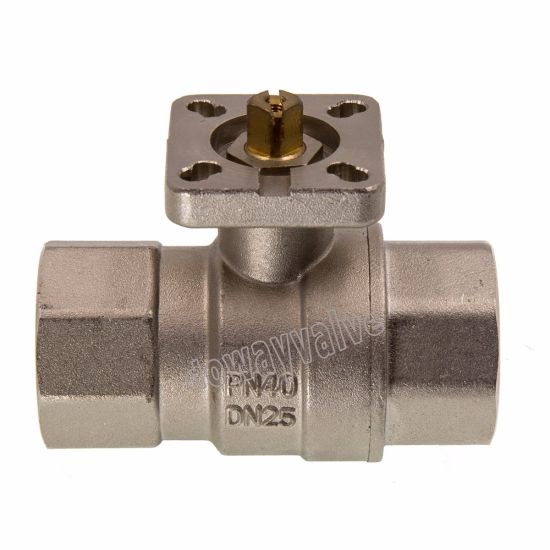
Consider a specific industrial implementation like a 600wog actuated ball valve dw b203. The 600 WOG rating implies robust structural reliability. It handles mid-pressure liquid or gas lines easily at ambient temperatures. This specific configuration excels in demanding automated environments. It seamlessly manages consistent flow cycles. It achieves this performance while maintaining optimal internal seal integrity over thousands of continuous cycles.
Failsafe mechanisms protect critical plant infrastructure during sudden power loss. Spring-return actuators provide reliable default positioning autonomously. You can configure them as either fail-open or fail-closed designs. Fail-closed designs shut off flow instantly during a severe emergency. Fail-open designs allow necessary pressure relief to prevent catastrophic pipe bursts.
Navigating Industry Standards and Compliance
Safety depends entirely on strict adherence to established protocols. Navigating complex design standards guarantees reliable baseline performance. Map out the essential testing benchmarks for your specific industrial sector carefully.
- ASME B16.34: Governs pressure-temperature ratings, wall dimensions, and authorized materials for flanged, threaded, and welding end models.
- API 608 / API 6D: Defines incredibly strict operational requirements for petrochemical processing and heavy-duty pipeline transport.
- API 598: Establishes universal industry benchmarks for rigorous inspection and hydrostatic pressure testing before shipment occurs.
Environmental protection requires highly specialized certifications today. Fire-safe designs must pass rigorous API 607 testing procedures. This certification ensures they maintain a secure seal even during active facility fires. Fugitive emissions represent another massive corporate liability. ISO 15848 certification proves the equipment effectively prevents harmful volatile gases from escaping into the atmosphere. You need these verified credentials for any environmentally sensitive applications.
Adopt a strictly evidence-oriented sourcing strategy immediately. Require physical proof supporting all manufacturer compliance claims. Never accept marketing literature stating a product is simply "designed to" a standard. You must demand the accompanying third-party certification. Request internal testing documentation to verify these engineering claims definitively. Genuine transparency builds lasting business trust.
How to Shortlist a Reliable Ball Valve Supplier
A flawless engineering specification sheet means nothing without a capable manufacturer. Quality assurance separates premium vendors from unreliable budget importers. Always demand Mill Test Reports (MTRs) before purchasing critical components. These specific documents verify the exact chemical composition of the raw metal. They also confirm essential physical yield properties. Traceability guarantees long-term structural integrity.
Evaluate internal manufacturing capabilities rigorously during your selection process. A reputable ball valve supplier controls their own CNC machining and assembly processes. Heavy reliance on fragmented sub-contracting introduces severe quality control risks. Direct factory oversight minimizes dangerous tolerance deviations significantly. Ask vendors about their ISO 9001 compliance standards.
Assess supply chain realities and actual lead times carefully. Ask detailed questions about their standard inventory depth. A strong manufacturing partner holds sufficient stock for rapid emergency deployment. Custom-actuated assembly requires entirely different timelines. Clarify exact manufacturing schedules upfront to avoid costly project delays later.
Post-sale technical support provides massive long-term value. Heavy industrial hardware eventually requires scheduled maintenance. Ensure the vendor offers highly responsive engineering support continuously. They should eagerly assist your team with complex troubleshooting scenarios. They must handle warranty claims efficiently and fairly. Rapid access to replacement parts keeps your facility running smoothly.
Conclusion
- Sourcing industrial piping components remains a strict exercise in proactive risk management. It should never be treated as simple price-shopping.
- Identifying optimal technical parameters aligns your upfront costs directly with long-term mechanical reliability. Properly matched materials prevent unexpected and disastrous plant shutdowns.
- Compile your exact operating parameters immediately. Document your unique media type, extreme pressure limits, and thermal ranges clearly.
- Package these specific details into a highly standardized Request for Quote (RFQ) document. This structured approach rapidly eliminates frustrating vendor guesswork.
- Reach out to experienced engineering and sales teams today. Schedule a comprehensive technical consultation to review your complex piping schematics and request an itemized quote.
FAQ
Q: What does 600 WOG mean on a ball valve?
A: The 600 WOG designation stands for Water, Oil, and Gas. It indicates the component can safely handle a maximum pressure of 600 pounds per square inch (psi) when transmitting these specific fluids at ambient room temperatures. It does not apply to high-temperature applications or steam.
Q: How do I choose between a 2-way and a 3-way ball valve?
A: Use a standard 2-way configuration when you strictly need to turn flow on or off for basic isolation. Choose a 3-way configuration, equipped with an L-port or T-port, when your system requires fluid diversion across multiple pipes, media mixing, or alternate routing.
Q: Why is material traceability (MTR) important when sourcing valves?
A: Mill Test Reports (MTRs) document the exact chemical makeup and physical strength of the raw metal used. This traceability ensures strict regulatory compliance, prevents catastrophic safety failures, and provides liability protection by proving the materials meet required engineering standards.
Q: What is the most common mistake when specifying a ball valve?
A: The most frequent error is failing to consult the manufacturer's Pressure-Temperature (P-T) curve. Buyers often assume ambient pressure ratings apply universally. Consequently, they select inappropriate seat materials that rapidly deform or fail completely when exposed to elevated system heat.
