Which Capacity of Lockable Ball Valves Does Your Project Need?
Views: 0 Author: Site Editor Publish Time: 2026-09-03 Origin: Site


Balancing exact flow control alongside mandatory safety compliance presents a steep engineering challenge. You must secure dangerous fluid lines while maintaining precise system capacity. Incorrect specification severely impacts everyday operations. Premature valve wear causes frequent leaks. Sudden pressure drops ruin overall system efficiency. Moreover, failing to meet OSHA lockout/tagout rules leads to severe compliance violations and massive project delays.
Engineers and procurement managers need a reliable technical framework. Careful evaluation prevents disastrous installation errors. We wrote this article to help you evaluate capacity and review stringent specifications. We will guide you through complex material choices and compliance standards. You will learn how to select the exact valves needed for demanding commercial and industrial projects. Precise sizing ensures safety and maximizes operational lifespan.
Key Takeaways
- Capacity relies on aligning Flow Coefficient (Cv), pressure ratings (WOG/CWP), and port sizing with system demands.
- Integrated locking mechanisms eliminate the compliance and clearance risks associated with aftermarket lockout devices.
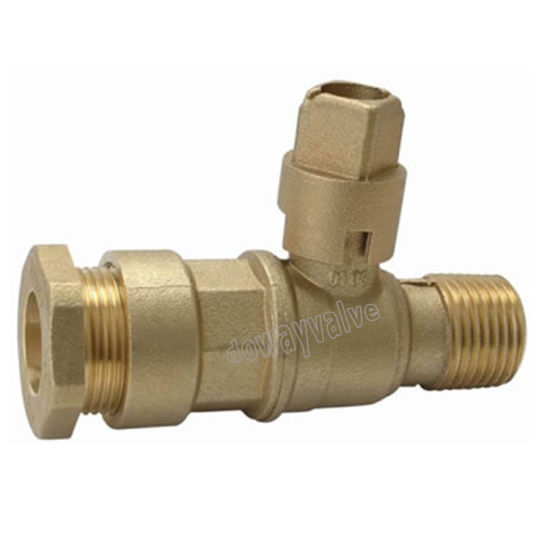
- Selecting specialized configurations (e.g., a lockable ball valve with square head) adds a layer of operational security in high-traffic or commercial spaces.
- Evaluating a lockable ball valves supplier requires reviewing their material traceability, testing standards, and inventory scalability.
Navigating Lockable Ball Valves Specifications and Capacity Limits
Determining exact capacity requires precise calculations. Engineers rely heavily on the Flow Coefficient (Cv). This metric defines the volume of water passing through the valve per minute at a one psi pressure drop. You must align your required flow rates against these pressure drop limits. Over-specifying valve size wastes valuable budget. Under-specifying creates dangerous flow restrictions. Always consult detailed lockable ball valves specifications before finalizing your blueprint.
Port sizing heavily influences overall capacity. You must choose between full port and standard port configurations based on your application. Full port models match the pipe diameter exactly. They deliver maximum flow and produce virtually zero pressure drop. Standard or reduced port models restrict flow slightly. They cost less to manufacture. Standard ports work perfectly fine for closed-loop HVAC systems. Full ports remain mandatory for heavy industrial sludge or fast-drain systems.
Pressure and temperature ratings dictate physical survival. Establish clear baseline requirements for working pressure early in the design phase. Manufacturers use WOG (Water, Oil, Gas) or CWP (Cold Working Pressure) to define limits. Standard commercial plumbing typically requires a 600 WOG rating. Heavy industrial chemicals demand at least 1000 WOG. Temperature thresholds also matter immensely. High-heat industrial steam requires vastly different ratings compared to chilled commercial water lines.
Valve Port Sizing Comparison Chart
| Port Type | Flow Restriction | Pressure Drop | Ideal Application | Cost Profile |
|---|---|---|---|---|
| Full Port | None | Negligible | High-volume industrial lines | Higher |
| Standard Port | Moderate | Noticeable | General HVAC and plumbing | Economical |
| Reduced Port | Significant | High | Low-flow chemical dosing | Lowest |
Matching Locking Mechanisms to Security and Compliance Protocols
Workplace safety relies entirely on predictable physical isolation. OSHA strictly mandates Lockout/Tagout (LOTO) safety programs during maintenance. Integrated locking plates support these mandatory protocols effortlessly. Factory-machined plates allow workers to insert padlocks directly into the handle mechanism. This prevents accidental actuation during critical pipe repairs. Standard manual valves lack this inherent security. Retrofitting them creates dangerous compliance gaps.
Standard levers work beautifully in wide-open mechanical rooms. However, specialized actuation prevents tampering in accessible areas. A lockable ball valve with square head requires a specific wrench for operation. You find these configurations frequently in public commercial buildings. They stop unauthorized users from accessing water lines or gas mains. Oval or wing handles solve different problems. They save space and fit perfectly inside tight utility closets. Padlock-ready lever handles remain the standard for open industrial floors.
Clearance realities often haunt field installation teams. Engineers frequently underestimate the physical footprint of integrated locking mechanisms. A standard lever needs considerable room to swing 90 degrees. Adding a padlock increases the bulk significantly. You must account for spatial footprint in both open and closed positions. Failing to measure clearance leads to blocked access panels. Workers might struggle to insert their LOTO padlocks if adjacent pipes sit too close.
Material Selection Based on Project Environment
Material choice dictates system longevity and safety. Brass and bronze dominate standard commercial plumbing. They resist mild corrosion and offer excellent machinability. Stainless steel handles harsh chemical processing. It survives extreme industrial environments effortlessly. Your fluid type dictates this decision entirely. Use stainless steel for corrosive acids. Choose brass for standard water lines to optimize your procurement budget.
Commercial building requirements demand strict regulatory compliance. Lead-free certifications remain absolutely critical for potable water systems. Regulatory bodies enforce NSF/ANSI 61 standards across North America. Installing non-compliant materials invites massive legal penalties. Always verify lead-free cast marks before accepting delivery. Proper lockable ball valves will display these certifications prominently on their bodies.
Seats and seals require equal attention during specification. These internal components manage daily friction and chemical exposure. PTFE (Teflon) offers exceptional chemical resistance. It handles most general applications safely. RPTFE adds fiberglass reinforcement for extra durability. It withstands higher temperatures and faster cycle frequencies. Viton excels specifically in high-temperature oil applications. Always cross-reference your fluid media against a trusted chemical compatibility matrix.
Implementation Risks: The Cost of Incorrect Valve Evaluation
System failures usually trace back to poor evaluation during the design phase. Shortcuts in procurement always lead to expensive maintenance disasters later. We see several recurring implementation risks across commercial projects. Understanding these pitfalls helps you protect your infrastructure.
- Aftermarket Locking Device Failures: Retrofitted lockout devices introduce severe reliability risks. 3D-printed add-ons wobble and degrade over time. Clamp-on devices break under moderate force. Factory-machined lockable stems guarantee physical security. They endure harsh industrial conditions seamlessly.
- Cavitation Degradation: Installing a unit possessing inadequate capacity causes rapid pressure drops. Vapor bubbles form inside the fluid stream. They collapse violently against the internal walls. This physical degradation destroys seals rapidly. It severely shortens equipment lifespan.
- Water Hammer Shockwaves: Operating standard manual valves too quickly sends shockwaves through your pipes. These pressure spikes fracture joints and damage expensive gauges. Proper capacity sizing minimizes this risk. Slower actuation mechanisms also help mitigate sudden pressure shifts.
- The Over-Sizing Fallacy: Choosing a larger capacity than necessary wastes project budget. Many engineers believe larger equals safer. It actually harms automated system calibration. Massive valves provide terrible throttling control. They degrade overall flow precision.
Avoiding these risks requires diligent calculation. You must trust your mathematical models over general assumptions. Measure twice and specify once. Proper evaluation ensures smooth commissioning and long-term reliability.
How to Shortlist a Reliable Lockable Ball Valves Supplier
Vendor selection impacts project success just as much as component specifications. Quality assurance separates credible manufacturers from risky brokers. You must demand strict material traceability. Ask for ISO and API documentation immediately. A credible lockable ball valves supplier provides detailed Material Test Reports (MTRs) upon request. These documents prove metallic composition and testing history.
Customization capabilities matter for complex engineering layouts. Evaluate a supplier based on their technical support resources. They should provide precise dimension guides and accurate CAD models. Digital integration helps engineers prevent spatial conflicts early. You might also require customized locking plates or unique handle configurations. A strong vendor modifies their standard designs effortlessly to meet your specific architectural demands.
Scalability defines true supply chain stability. Spot buying works fine for minor emergency repairs. Large-scale commercial rollouts require massive, reliable inventory. Assess their production lead times carefully. Ask about their raw material sourcing strategies. Delays in valve delivery frequently stall entire plumbing installations. Choose a partner possessing proven manufacturing bandwidth and reliable logistics networks.
Conclusion
Securing exact flow control requires disciplined engineering and rigorous evaluation. The critical path to procurement starts by calculating precise Cv metrics. Next, you must determine strict LOTO compliance requirements for your maintenance teams. Finalize your material specs based on fluid media and building codes. Finally, aggressively vet your manufacturing partner for traceability and scalable inventory.
Do not leave your next project to chance. Incorrect sizing and poor locking mechanisms invite disaster. We encourage engineers and procurement managers to take immediate action. Request detailed dimension sheets and technical data from your engineering team today. Procure a pilot sample for field testing to guarantee perfect integration.
FAQ
Q: What is the difference between standard ball valves and lockable ball valves?
A: Standard versions feature basic handles designed solely for flow control. Lockable versions incorporate mechanical stem modifications and integrated handle plates. These plates align to accommodate padlocks. This specialized design prevents unauthorized tampering and supports mandatory safety programs.
Q: Can a lockable ball valve with square head be locked in both the open and closed positions?
A: Yes, most factory-machined designs support bidirectional locking. The handle plate typically features multiple alignment holes. This allows maintenance teams to secure the line safely open for drainage or tightly closed for isolation.
Q: How do I determine the right pressure rating for my lockable ball valves specifications?
A: Identify the maximum operating pressure of your system under full load. Add a standard safety margin of 20 to 30 percent. Select a WOG or PN rating exceeding this calculated total to ensure absolute operational safety.
Q: What should I look for when evaluating quotes from a lockable ball valves supplier?
A: Look beyond the unit price. Demand verifiable Material Test Reports (MTRs) to confirm metal quality. Check their warranty terms carefully. Ensure their products carry necessary compliance certifications matching your local building codes.
